

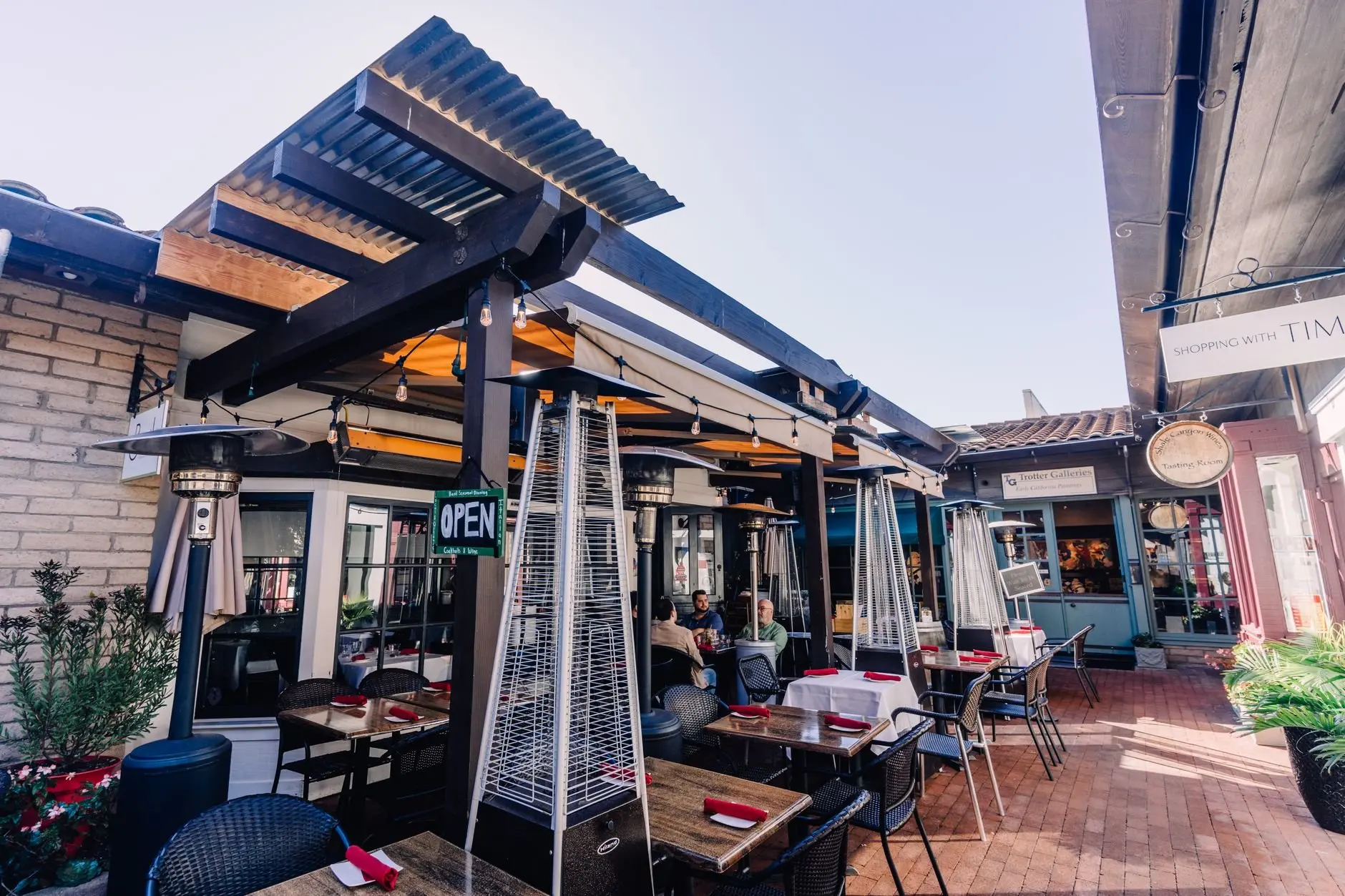
A menu promises local chile, but is it grown in New Mexico? Not necessarily. Local dining in Santa Fe and Albuquerque is easiest to judge by sourcing, preparation and where you buy, not by the word alone.
Treat “local” as a question to ask, not a label to trust. For the wider picture of regional cooking, start with our guide to new mexico food, then use this page to read menus, markets and neighborhoods more critically.
What local means on a Santa Fe or Albuquerque menu
The word bundles several separate claims, and a menu rarely says which one it means. It can describe an ingredient grown in New Mexico, a product made or processed by a New Mexico producer, or simply a restaurant with deep roots in its neighborhood. Each claim is legitimate, but they are not interchangeable, and a diner who wants to support state agriculture needs the first two more than the third.
Federal agricultural data treats these as different questions. The USDA Census of Agriculture state tables for New Mexico include a table on food marketing practices and value-added products for 2022 and 2017, and the census lists a Local Food Marketing Practices survey as a related program. How food is sold and how it is processed are tracked separately from where it is grown. That is a useful model for reading a menu: ask about origin, processing and sale as distinct points.
Common assumptions, tested
| Common assumption | What the record shows | Planning use |
|---|---|---|
| Local means grown in New Mexico | USDA tracks food marketing practices and value-added products as their own topic, apart from crop acreage. | Ask a server or vendor whether the claim is about the growing, the processing or the restaurant. |
| Chile is one ingredient | NMSU research treats chile types and product sourcing as a subject in its own right. | Ask which chile is used and where it comes from before assuming a dish is regional. |
| A regional name guarantees regional sourcing | NMSU has examined regional branding in a global marketplace, which treats a name as a marketing tool. | Treat a place name on a label as a prompt for a question, not as proof. |
| Crop figures are hard to find | USDA state tables report acres harvested for specified crops, comparing 2022 and 2017. | Check the state tables when you want to know what the state actually grows. |
Figures and topics above come from the USDA Census of Agriculture for New Mexico and the NMSU chile task force report guide.
Red chile and green chile are not a single ingredient
Green chile and red chile are the two ingredients most people mean when they talk about New Mexico flavor, and they are also the easiest to misread on a menu. A dish that lists both as separate choices is telling you that the sauce is a defining part of the plate, not a garnish. That makes the sauce the most useful place to start a sourcing conversation.
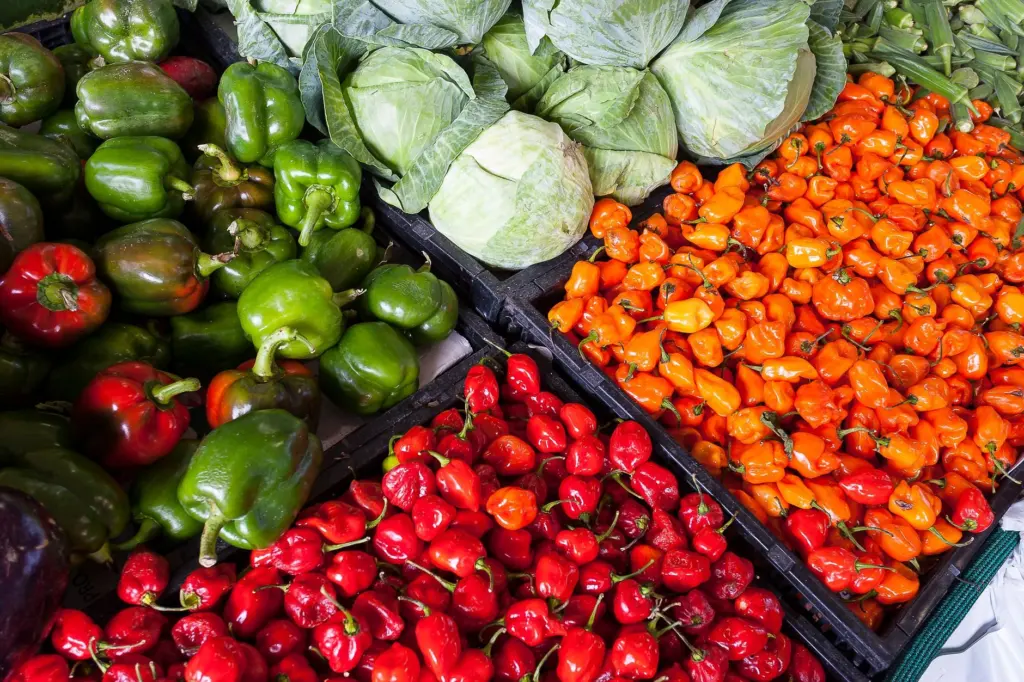
NMSU’s task force reports give the topic real depth. NMCTF Report 8 covers New Mexico’s chile pepper industry, specifically chile types and product sourcing. The same collection includes a report on a prototype mechanical gap sorter for mechanically harvested red chile. The practical point is that red chile reaches a kitchen through harvesting and sorting steps, so a restaurant’s answer about its red sauce can legitimately involve processing as well as farming.
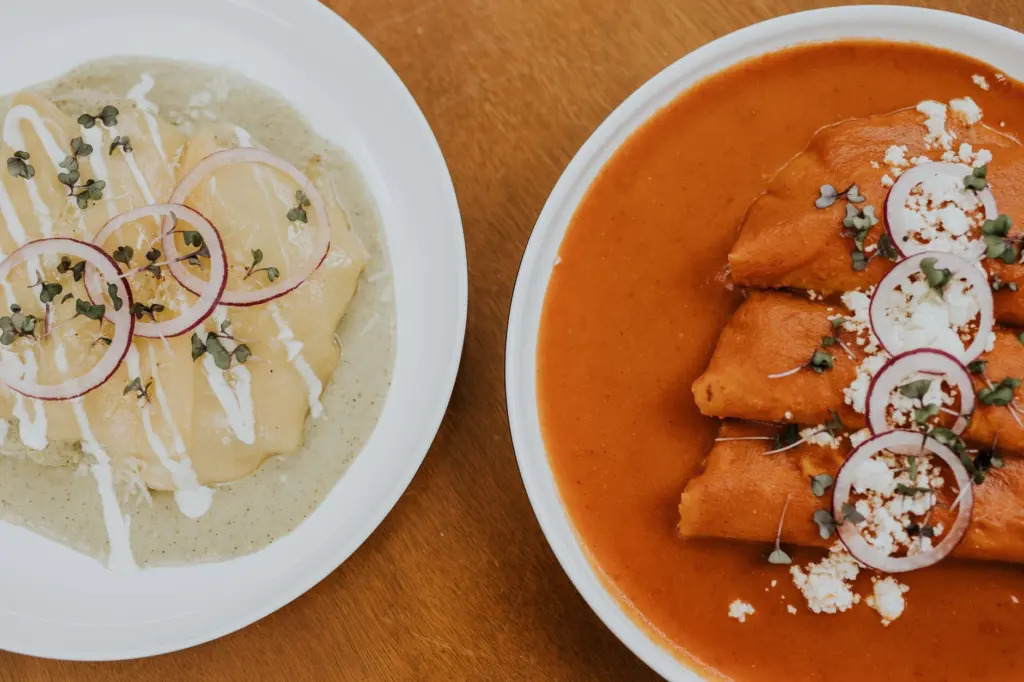
If you cannot decide, order the sauce that the kitchen seems proudest of, then ask about it. Staff who can describe where their chile comes from, and whether the sauce is made in the building, give you the most reliable signal of local intent.
Ingredients grown or produced in New Mexico
Chile is the headline crop, but it is not the only ingredient with a New Mexico story. NMSU’s collection also includes NMCTF Report 9 on the economic impact of southern New Mexico vegetable production and processing. That title matters for diners because it pairs production with processing, which is a reminder that a local vegetable on a plate may have been grown in one part of the state and prepared in another.
For acreage, go to the primary source. The USDA state tables include Table 35, which lists acres harvested by specified crops for 2022 and 2017. Reading it side by side with Table 2 on food marketing practices and value-added products gives a fuller sense of what the state grows and how some of that food is sold. Both sit on the same USDA state-level report page, so one visit covers both.
The takeaway is to match each claim to the right kind of evidence. Crop questions belong with acreage tables, processing questions with value-added data, and chile-specific questions with NMSU’s chile research. Extension publications at the university have been produced for over 100 years, so the background reading is deep when you want it.
Reading menus with sourcing in mind
A menu cannot prove sourcing, but it can show whether a kitchen thinks about it. The most useful habit is to look for specifics, then follow up politely with a question. These checks work in both cities and suit diners who want a practical test, not a research project.
- Look for named specifics. A dish that names a grower, a chile type or a producer is making a claim you can ask about. A bare “local” is a vague claim, so ask what it refers to.
- Separate style from sourcing. New Mexican cooking describes a way of preparing food. A plate can follow that style faithfully while its ingredients come from anywhere, so style alone does not answer the sourcing question.
- Ask about the sauce. Because red and green chile anchor so many dishes, asking whether the sauce is made in-house and where the chile is from tells you more than asking about a side salad.
- Treat regional names as prompts. Branding is a studied marketing practice, and NMSU has published on regional branding in a global marketplace. A place name on a label is a reason to ask, not a guarantee.
- Prefer a direct answer. A server who says they will check and returns with a clear reply is a better sign than a confident but vague one. If nobody can answer, that is information too.
These questions are not an accusation. Plenty of good restaurants buy from a mix of sources, and a candid answer about that mix is worth more than a slogan.
Markets, neighborhoods and what each can tell you
A farmers market shortens the distance between the person who grew the food and the person who eats it. That makes it the best place to ask where something was grown, how it was handled and what to do with it. A vendor can answer in seconds what a menu line cannot.
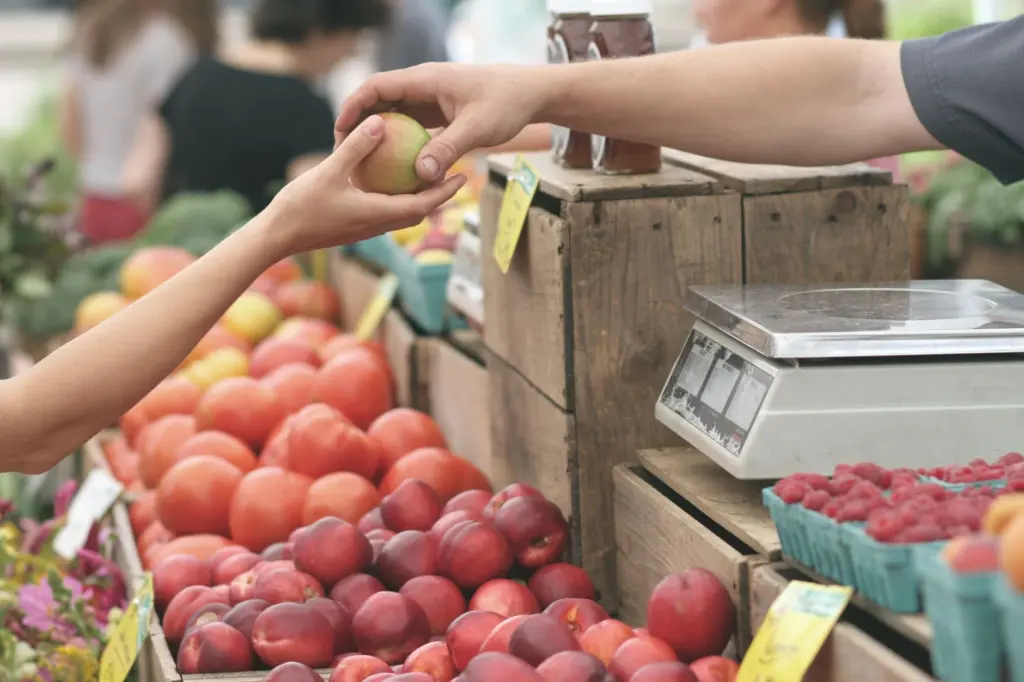
Neighborhoods tell a different story. A long-standing family restaurant says something about local ownership and cooking tradition, which is a genuine form of local value even when it says little about where each ingredient was grown. Both kinds of local count; the mistake is assuming one proves the other.
When you plan a day of eating in Santa Fe or Albuquerque, a workable approach is to pair the two. Shop or browse at a market to see what growers offer, then choose a restaurant whose menu mentions specific ingredients and cooks in the regional style. Compare what you learn with the state’s published figures if a claim sounds too good, and let the answers guide where you eat again.
Frequently asked questions
| Question | Answer |
|---|---|
| Where can I find New Mexico crop acreage? | The USDA Census of Agriculture state tables list acres harvested by specified crops in Table 35, comparing 2022 and 2017. They are on the USDA New Mexico report page. |
| Is red or green chile more local? | Neither is inherently more local. Both are chile types, and sourcing depends on the kitchen, so ask the restaurant where its chile comes from. |
| Does a regional brand name prove local sourcing? | No. A regional name is a branding choice, a topic NMSU has researched, so use it as a reason to ask a follow-up question. |
| Where is NMSU’s chile research collected? | NMSU’s library guide to the chile task force reports lists titles on chile types, sourcing, red chile sorting and regional branding at its chile report guide. |